Pool heater maintenance before November
Your heater has been quiet since spring. We tune it up before November, so the first cold night finds it ready.
Cold water, a dead display, or a heater that quits seconds after firing? We fix gas heaters and heat pumps across Brevard County, then tune it up before next November.
- Book any month, May to October
- 22-item gas-heater tune-up
- 98 Google reviews at 5.0
A pool heater’s year in Brevard County
-
May to October: Tune here
Book the tune-up any month from May to October, while the heater sits idle. No need to wait for fall. What gets checked
Book by the end of October.
-
November: Season opens
Heating season opens and the heater takes its first hard call.
-
December to March: Core season
Core demand — the months you actually swim.
-
April: Season closes
Note anything odd for next year's tune-up.
How often should you have your pool heater serviced?
At least once a year, any month from May to October — before heating season opens in November.
The U.S. Department of Energy expects most heaters to need a yearly tune-up. Raypak's 206A–406A manual asks for twice a year, the same rhythm as our Maintenance Club.
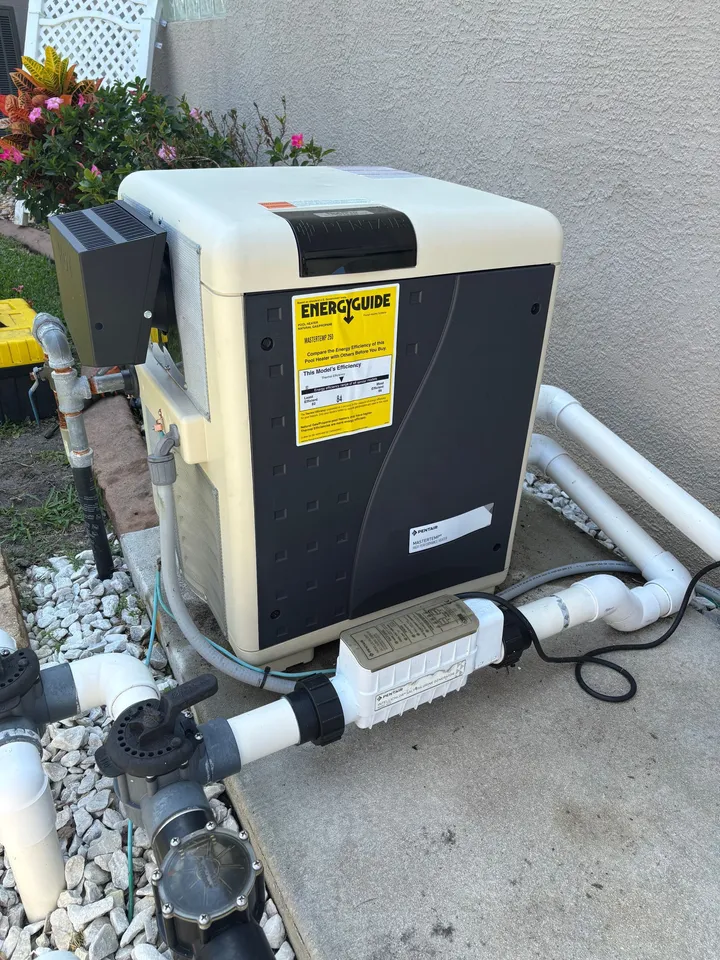
What does heater maintenance cover?
A safety test, a cleaning and an inspection — 22 items on a gas heater.
Safety 3 items
- 1Exhaust temperature, for a safe burn
- 2Gas leaks
- 3Safety sensors and controls
Cleaning 1 item
- 4Debris blown into the heater: sand, leaves, salt build-up
Inspection 7 items
- 5Plumbing and manifold leaks
- 6Motor operation
- 7Abnormal noise
- 8Excessive vibration
- 9Blower motor
- 10Gas valve
- 11Burners
Efficiency 5 items
- 12A safe, efficient burn
- 13Flame height, if applicable
- 14Thermostat
- 15Exhaust temperatures
- 16Second-stage regulator vent, cleaned for gas flow
Prevention 4 items
- 17Electrical connections
- 18Corrosion
- 19Rust-inhibiting spray on sensors, contacts, gas valve and hardware
- 20A 15–20 minute test run
Rodent check 2 items
- 21Debris, scat and nesting cleared
- 22Wiring, tubing and other items rodents break
- Own a heat pump? Tell us the make and model when you call, and we'll confirm what the visit covers.
- Heater already down? That's a pool heater repair visit, not a tune-up.
Due for a tune-up? Call (321) 536-9122 or schedule service. Schedule Service or call (321) 536-9122.
Before the first start of the season
Give the heater three looks before it fires. Everything inside the cabinet is our job.
Smell gas? Don't light the heater or touch a switch. Leave the area, then call 911 and your gas company or propane supplier.
Can I get a tune-up without joining the Club?
Yes — book a single pre-season tune-up. One visit, nothing recurring.
One tune-up, this season
- One pre-season visit, booked before November.
- No membership, nothing recurring.
How long should a pool heater last?
Gas heaters typically last five or more years; heat pumps can last ten or more. Those are U.S. Department of Energy figures, assuming proper installation and maintenance.
What shortens a heater's life, and the fix
| What shortens it | What the manual says | What to do |
|---|---|---|
| Unbalanced water | Raypak: pH below 7.2 corrodes the heat exchanger, and high mineral content forms scale. Damage from chemical imbalance isn't covered by the warranty. | Keep the water balanced. Your pool service or pool shop owns the chemistry. |
| Concentrated chlorine | Raypak: free chlorine must not exceed 5 ppm, and chemicals must be fully diluted in the pool before they reach the heater. | Dose the pool, never the skimmer. |
| Pests and debris | Raypak: check for rodent nests after long periods of non-use. Pentair: clear debris from the heater and its vent before start-up. | The three pre-season checks above. |
Heater past those ages and failing? Here's how to choose: repair or replace.
Schedule your tune-up
Tell us the heater's make and your city or ZIP — we'll get you on the schedule.
More tune-up questions
Should I turn the pool heater off between swims?
Yes, for a gas heater you use now and then — the U.S. Department of Energy calls gas ideal for quick heating. A heat pump warms gradually, so switching it off means planning further ahead. Compare the two: gas or heat pump.
Can I pour liquid chlorine into a pool with a gas heater?
Yes — pour it into the pool, not the skimmer, so it dilutes before it reaches the heater. Raypak caps free chlorine at 5 ppm. More can damage the heater, and the warranty doesn't cover that.
Can I use my pool heater year round?
Yes. A Brevard heater can run any month; most of its work falls November to April. Raypak says it can keep running through short cold spells while the pump keeps water moving. Heat-pump owners should follow their manual's freeze guidance.
Start before the first cold night
Your heater has been quiet since spring. Schedule a pre-season tune-up before November.
98 Google reviews at 5.0
Mon–Fri, 8am–5pm; closed weekends.